business transformation

  • What is the structure of effective design principles

    The structure of effective design principles should follow the decisions and behaviours it needs to support. A practical structure combines scope, core content, owners, evidence, status or measures, approval rules and a review history. This artefact sets the rules that guide design choices and resolve competing options. A useful design principles is not simply a…

  • How to create a benchmarking report

    A benchmarking report should turn an important management need into a controlled, usable artefact. To create it, define the decision it must support, gather evidence from accountable owners, structure the content consistently, test it against real scenarios and establish a review cycle. This artefact compares the current model with peers, recognised practices or relevant performance…

  • Why do businesses value a good continuous improvement plan

    Businesses value a good continuous improvement plan when it helps leaders make faster, better-evidenced decisions and coordinate work across organisational boundaries. The artefact creates value only when managers use it to direct action, resolve trade-offs and maintain accountability. This artefact establishes review, learning, prioritisation and improvement cycles after implementation. A useful continuous improvement plan is…

  • How to create a case for change

    A case for change should turn an important management need into a controlled, usable artefact. To create it, define the decision it must support, gather evidence from accountable owners, structure the content consistently, test it against real scenarios and establish a review cycle. This artefact explains the problems, opportunities and consequences of retaining the current…

  • Why is a benchmarking report important

    A benchmarking report is important because it converts dispersed knowledge into a reliable basis for management action. Without that discipline, teams often work from different assumptions, delay decisions or treat approval as an end in itself. This artefact compares the current model with peers, recognised practices or relevant performance standards. A useful benchmarking report is…

  • The contents of a business operating model

    The contents of a business operating model

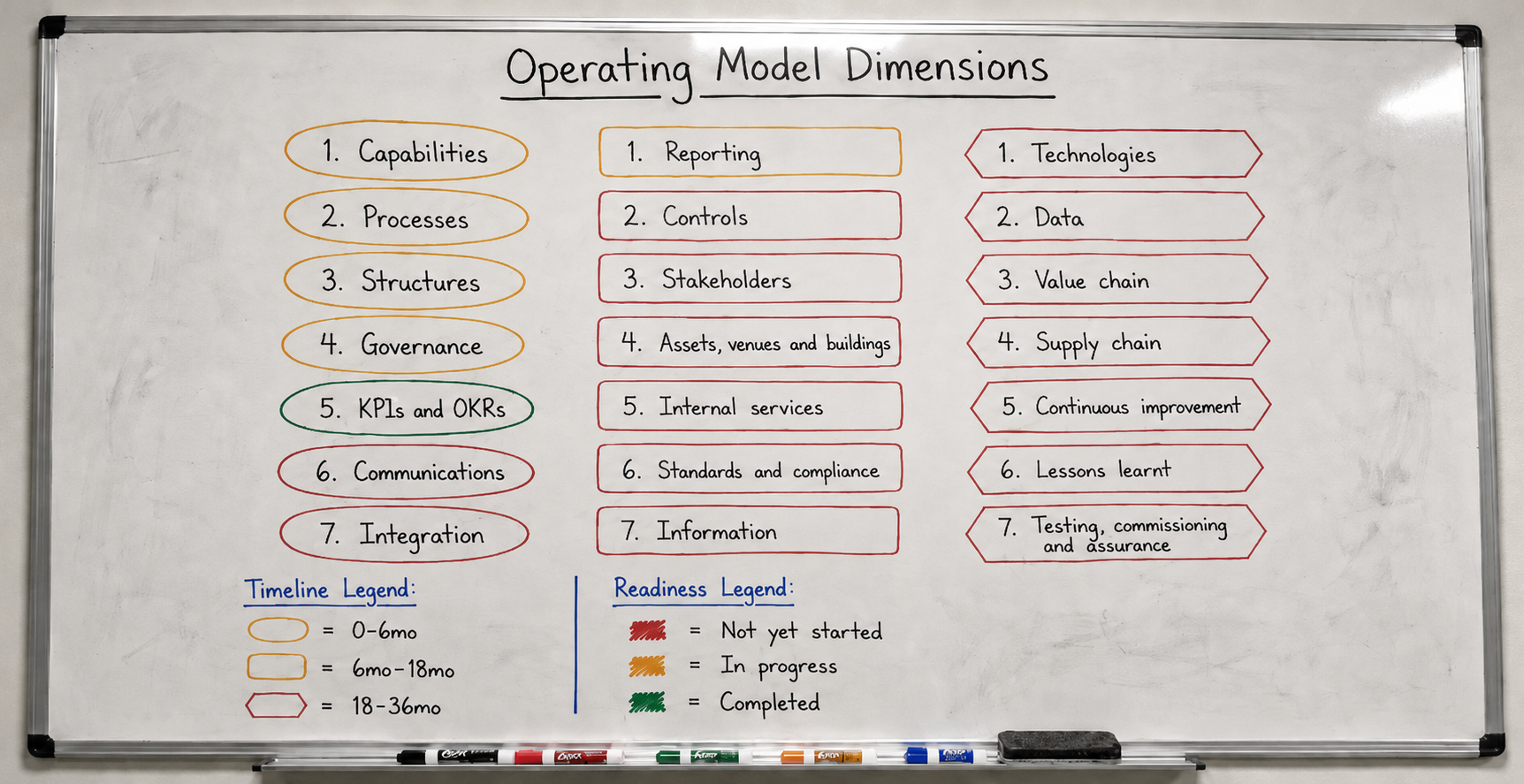
    How to sequence the 21 dimensions of an operating model An operating model explains how an organisation converts strategy into reliable delivery. It connects capabilities, processes, governance, data, technology, people, assets and supporting services into one coherent system. However, organisations cannot design and implement every operating model dimension at the same time. Some dimensions create…